
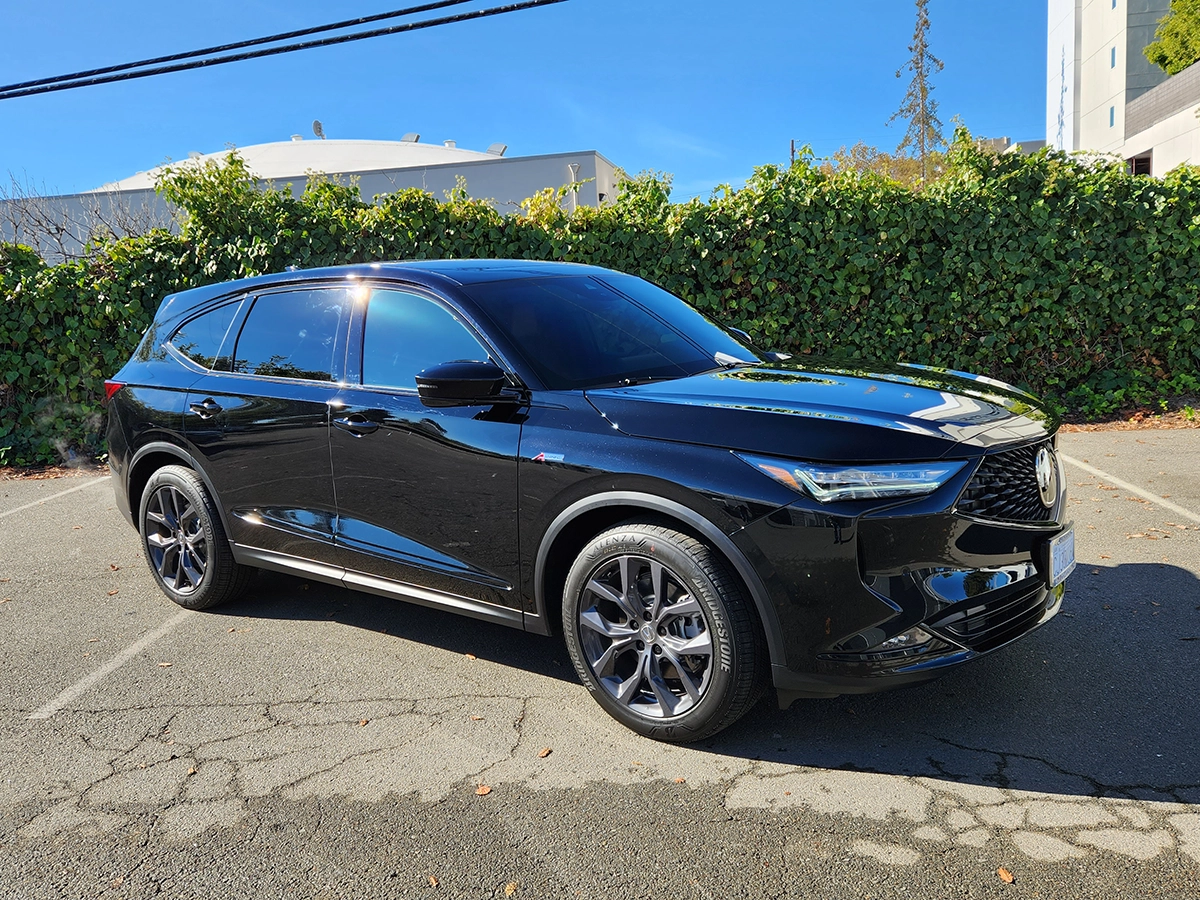
"Clear bra" and "ceramic coating" get thrown around like they are two versions of the same thing. They are not. One is a physical film, the other is a chemical layer, and they protect your paint from completely different threats. Understanding the difference makes it much easier to decide what your car actually needs, and in what order.
What clear bra (PPF) actually protects against
Clear bra is another name for paint protection film, a clear, durable urethane film applied directly over your paint. It has real thickness to it, which matters, because it works by physically absorbing impact before it reaches the clear coat underneath. That includes:
- Rock chips and road debris kicked up on the highway.
- Light scratches and scuffs from car washes, bags, and everyday use.
- Bug splatter and bird droppings, which can etch into clear coat if left too long.
- Minor abrasion in high-touch areas like door edges and the rear bumper loading lip.
Quality film is also self-healing, so light swirl marks and fine scratches in the film disappear with a bit of heat from the sun or warm water. It is a physical shield, full stop. If a rock is going to hit your paint, PPF is the layer that stands between the two.
What ceramic coating actually protects against
Ceramic coating works completely differently. It is a thin liquid layer that chemically bonds to the surface of your paint, film, or glass and cures into a hard, glossy, hydrophobic finish. Because it is measured in microns rather than millimeters, it does not add meaningful thickness, and it cannot stop a rock chip. What it does very well is:
- Make water and grime bead up and sheet off, so the car stays cleaner longer between washes.
- Make washing itself faster and easier, since dirt has a harder time bonding to the slick surface.
- Add depth and gloss to the paint or film underneath.
- Add a layer of chemical resistance against things like bird droppings, tree sap, and light environmental staining.
Think of ceramic coating as protecting the finish and the shine, while PPF protects the structure of the paint itself.
Why many owners run both
Once you see PPF and ceramic coating as solving different problems, the case for combining them is straightforward. A common approach is PPF on the front of the car, the areas that take the most impact, such as the hood, front bumper, fenders, and mirrors, paired with a ceramic coating over the rest of the vehicle. Many owners also apply ceramic coating directly on top of the PPF itself, which adds gloss and makes the film easier to keep clean, on top of the impact protection it already provides.
That combination gives you impact protection exactly where the car needs it most, along with a slick, easy-to-maintain finish everywhere else, including over the film.
How to decide where to start
If your budget or timeline means picking one first, think about what worries you most about the car:
- If you are most concerned about rock chips, highway miles, or a new car with paint that has never been touched, start with PPF on the high-impact front areas.
- If you are most concerned about keeping the car clean, adding shine, or protecting against everyday grime and light chemical staining, start with a ceramic coating.
- If you want the most complete protection, PPF up front with ceramic coating over the whole car, including the film, covers both physical and chemical threats.
There is no wrong order. Some owners do the film first and add coating later, others coat the whole car right away and add film down the road. We walk the vehicle with you, talk through how and where you drive, and recommend a plan that fits without overselling you on more than you need.
Curious which makes sense for your car? Read more on our paint protection page or our ceramic coating page, or get a free quote below.